Craniosacral Therapy
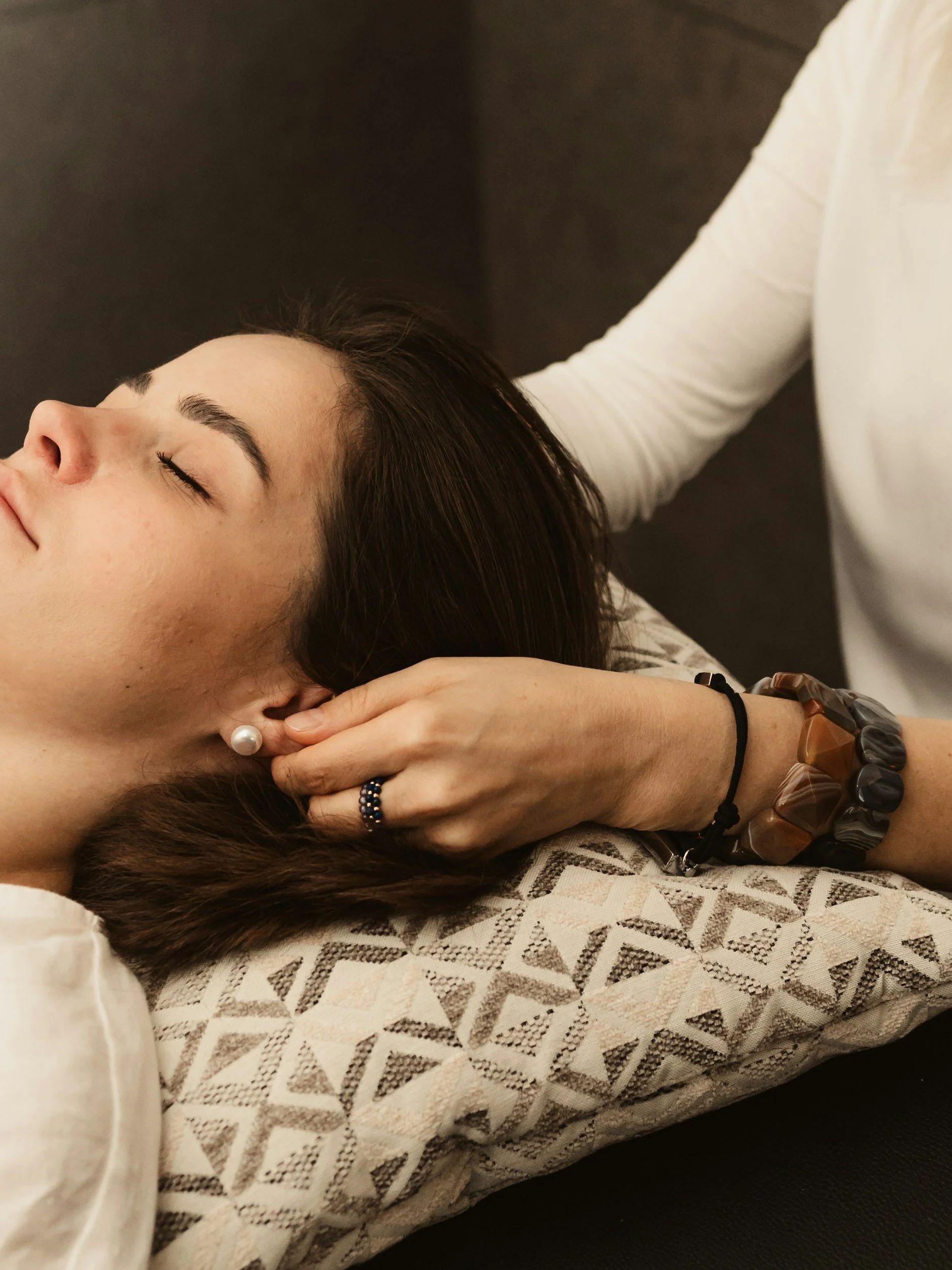
A light-touch whole-body treatment technique
What it is
Craniosacral therapy is a hands-on treatment that uses very light pressure, about the weight of a nickel, along the skull, spine, and sacrum. Your therapist is assessing tension in the fascia, the connective tissue that wraps around muscles, nerves, and organs, and using gentle holds to ease it.
It is slow and quiet. There's no cracking, no stretching, and no deep pressure.
Why we offer it
Pelvic pain often involves more than the pelvic floor. The sacrum forms the back of the pelvis and connects to the spine and the base of the skull through continuous layers of fascia. For some people, especially those with a sensitive or guarded response to pain, light-touch work is easier to tolerate than more intensive treatment, and it can make other therapy more comfortable.
We use it alongside pelvic floor therapy, visceral manipulation, and movement work, depending on what you need.
Who it's used for
Tension headaches and jaw tightness
Neck, back, and pelvic pain
Lingering tension after surgery, injury, or childbirth
Postpartum recovery
Trouble relaxing or sleeping when you're in pain
People who find deeper manual techniques too uncomfortable
What a session looks like
First visit. We go over your history, your symptoms, and what you want to change. This is followed by treatment.
Treatment. You lie on a table, fully clothed. Your therapist places their hands on your head, neck, back, feet or sacrum and stays in each position for a few seconds or minutes. Sessions are quiet. Many people get very relaxed, and some fall asleep.
Your say. You can ask questions, change position, or stop at any point. Nothing happens without your agreement.
Afterward. Some people feel calm or tired. Others notice changes over the next few days, and some don't notice much right away. We'll check in at your next visit and adjust the plan.
About the evidence
Research on craniosacral therapy is limited, and the mechanisms proposed for it are debated. We offer it as one tool within a broader treatment plan, not as a standalone cure, and we'll tell you honestly how you're responding.
Book a visit
If you're not sure whether craniosacral therapy is right for you, call or send us a message and we'll help you decide.